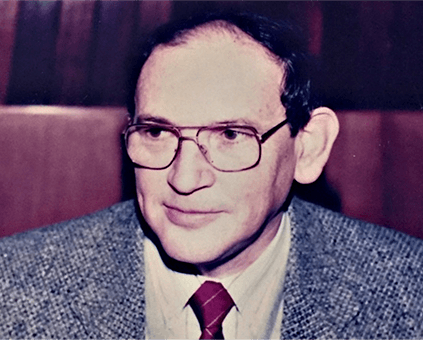
The Small Church Music website was founded in the year 2006 by Clyde McLennan (1941-2022) an ordained Baptist Pastor. For 35 years, he served in smaller churches across New South Wales, Victoria and Tasmania. On some occasions he was also the church musician.
As a church organist, Clyde recognized it was often hard to find suitable musicians to accompany congregational singing, particularly in small churches, home groups, aged care facilities. etc. So he used his talents as a computer programmer and musician to create the Small Church Music website.
During retirement, Clyde recorded almost 15,000 hymns and songs that could be downloaded free to accompany congregational singing. He received requests to record hymns from across the globe and emails of support for this ministry from tiny churches to soldiers in war zones, and people isolating during COVID lockdowns.

TMJ Software worked with Clyde and hosted this website for him for several years prior to his passing. Clyde asked me to continue it in his absence. Clyde’s focus was to provide these recordings at no cost and that will continue as it always has. However, there will be two changes over the near to midterm.
To better manage access to the site, a requirement to create an account on the site will be implemented. Once this is done, you’ll be able to log-in on the site and download freely as you always have.
The second change will be a redesign and restructure of the site. Since the site has many pages this won’t happen all at once but will be implement over time.
But you will care. Because one day, you will leave this city—or it will leave you—and you will realize you spent years walking through a wonderland with your eyes closed.
Walk through any major transit hub at rush hour. What do you see? Ninety percent of heads angled down at a 45-degree angle, faces lit by the blue glow of doomscrolling, email, or a mobile game. These people are not navigating the city; they are enduring transit time until they can be delivered to their destination. They wouldn’t notice if a mural was painted next to them. They wouldn’t hear a street musician playing a masterpiece. The city becomes a loading screen between Wi-Fi signals. unaware in the city
It is possible to break the trance. It requires discomfort, but the reward is rediscovering the city as a living, breathing organism rather than a machine you are trapped inside. But you will care
This isn’t a flaw. It’s a survival mechanism. And it’s changing the very nature of city life. What do you see
The daily commuter develops a superpower: the ability to see only the path to their destination. Ask someone who has taken the same train for five years what color the station tiles are. Ask them about the small bakery that opened three months ago on their corner. They will have no idea. Their brain has optimized their route to such an extreme that 95% of the sensory input is filtered out as “noise.” They are ghosts in their own neighborhood.
But you will care. Because one day, you will leave this city—or it will leave you—and you will realize you spent years walking through a wonderland with your eyes closed.
Walk through any major transit hub at rush hour. What do you see? Ninety percent of heads angled down at a 45-degree angle, faces lit by the blue glow of doomscrolling, email, or a mobile game. These people are not navigating the city; they are enduring transit time until they can be delivered to their destination. They wouldn’t notice if a mural was painted next to them. They wouldn’t hear a street musician playing a masterpiece. The city becomes a loading screen between Wi-Fi signals.
It is possible to break the trance. It requires discomfort, but the reward is rediscovering the city as a living, breathing organism rather than a machine you are trapped inside.
This isn’t a flaw. It’s a survival mechanism. And it’s changing the very nature of city life.
The daily commuter develops a superpower: the ability to see only the path to their destination. Ask someone who has taken the same train for five years what color the station tiles are. Ask them about the small bakery that opened three months ago on their corner. They will have no idea. Their brain has optimized their route to such an extreme that 95% of the sensory input is filtered out as “noise.” They are ghosts in their own neighborhood.