Ps/2 Compatible Mouse Driver ((exclusive)) Official

A current xbody GPS map must be used for effective xgody gps navigation. You may quickly get the most accurate and current maps for your xbody device with the xbody GPS Map Update. By doing this, you can be sure that you have the most up-to-date information on paths, tourist attractions, and other factors to get you to your destination fast and safely. Accessing dining establishments’ gasoline stations and other locations nearby is very simple with the xbody GPS Map Update. With this update, your navigation system now has all the data it needs to get you exactly where you need to go, so you may explore fresh regions with confidence.

How to Download & Install the Latest xgody gps update & Maps

You typically need to these standard procedures in order to upgrade an Xgody GPS system:

  • Obtain an internet connection:Ensure that the internet is available from your GPS gadget. If your device supports it, you can either utilize a mobile data connection or a Wi-Fi network to connect to it.
  • Choose the update technique: Verify whether over-the-air (OTA) updates are supported with your Xgody GPS system and the fact that you can update it without a computer. For additional information on how to improve your specific model, consult the user manual or manufacturer's website.
  • Update through OTA (if supported): Perform the following steps if your Xgody GPS system supports OTA updates:
    1) On your GPS devices, select the Settings button.
    2) An "xgody gps update maps" or "Software Download" option should be present.
    3) To download and install the most recent patches, choose it and adhere to the on-screen instructions.

void install_mouse_handler() set_idt_gate(0x2C, (uint32_t)mouse_isr, 0x08, 0x8E); outb(0x21, inb(0x21) & ~0x20); // Unmask IRQ12 on slave PIC outb(0xA1, inb(0xA1) & ~0x20); ps/2 compatible mouse driver

Your main loop can now poll mouse_x , mouse_y , and mouse_buttons . Here’s a simple console debug: In this article, we’ll build a bare-bones PS/2

if (mouse_cycle == 0) // Byte 0: verify bit 3 = 1 (always set in standard packet) if ((data & 0x08) == 0x08) mouse_packet[0] = data; mouse_cycle = 1; else if (mouse_cycle == 1) mouse_packet[1] = data; mouse_cycle = 2; else if (mouse_cycle == 2) = 0xFFFFFF00; mouse_x += dx; mouse_y -= dy; // Invert Y for screen coordinates mouse_buttons = mouse_packet[0] & 0x07; Communication is synchronous, with the device sending 11-bit

The PS/2 mouse might seem like a relic of the 1990s, but it remains the gold standard for low-level OS development. Unlike USB, which relies on complex host controllers and descriptor parsing, the PS/2 interface is simple, memory-mapped, and interrupt-driven. In this article, we’ll build a bare-bones PS/2 mouse driver from scratch, covering initialization, packet decoding, and integration with a simple GUI. 1. Understanding the PS/2 Interface The PS/2 port uses two bidirectional lines: Clock (usually IRQ 12 for the mouse) and Data . Communication is synchronous, with the device sending 11-bit packets (1 start bit, 8 data bits, 1 parity bit, 1 stop bit) when the host pulls the clock low.
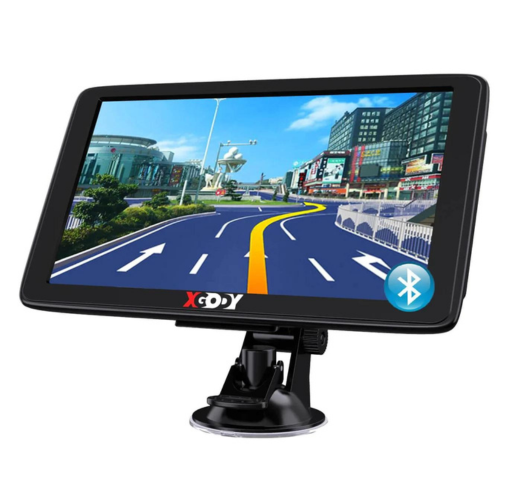

"When updating Xgody GPS map software, you may encounter some common issues. Here are a few potential problems and their possible solutions:"

Ps/2 Compatible Mouse Driver ((exclusive)) Official

void install_mouse_handler() set_idt_gate(0x2C, (uint32_t)mouse_isr, 0x08, 0x8E); outb(0x21, inb(0x21) & ~0x20); // Unmask IRQ12 on slave PIC outb(0xA1, inb(0xA1) & ~0x20);

Your main loop can now poll mouse_x , mouse_y , and mouse_buttons . Here’s a simple console debug:

if (mouse_cycle == 0) // Byte 0: verify bit 3 = 1 (always set in standard packet) if ((data & 0x08) == 0x08) mouse_packet[0] = data; mouse_cycle = 1; else if (mouse_cycle == 1) mouse_packet[1] = data; mouse_cycle = 2; else if (mouse_cycle == 2) = 0xFFFFFF00; mouse_x += dx; mouse_y -= dy; // Invert Y for screen coordinates mouse_buttons = mouse_packet[0] & 0x07;

The PS/2 mouse might seem like a relic of the 1990s, but it remains the gold standard for low-level OS development. Unlike USB, which relies on complex host controllers and descriptor parsing, the PS/2 interface is simple, memory-mapped, and interrupt-driven. In this article, we’ll build a bare-bones PS/2 mouse driver from scratch, covering initialization, packet decoding, and integration with a simple GUI. 1. Understanding the PS/2 Interface The PS/2 port uses two bidirectional lines: Clock (usually IRQ 12 for the mouse) and Data . Communication is synchronous, with the device sending 11-bit packets (1 start bit, 8 data bits, 1 parity bit, 1 stop bit) when the host pulls the clock low.