Buy now on Amazon Buy now on Barnes & Noble Buy now on Apple Books
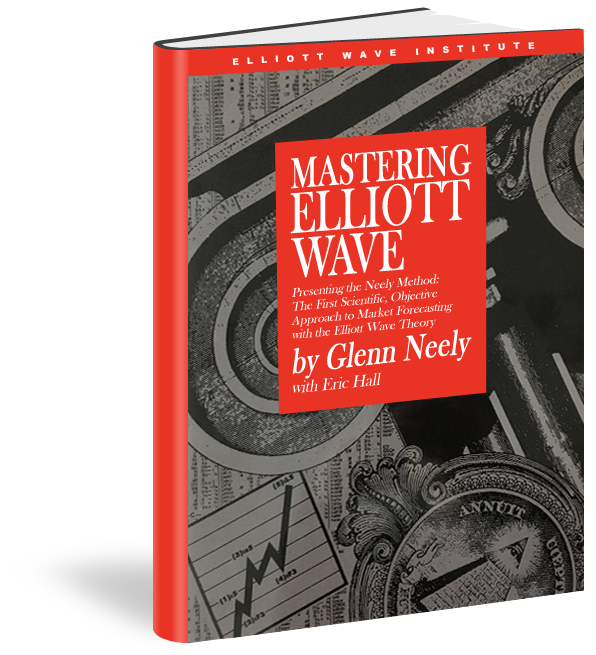
Mastering Elliott Wave book by Glenn Neely

Nina Plastic Instant

In his classic book, Mastering Elliott Wave, Glenn Neely teaches his revolutionary approach to Wave theory, called NEoWave (advanced Elliott Wave). Continuously in print since its publication in 1990, this groundbreaking book changed Wave theory forever thanks to these scientific, objective, and logical enhancements to Wave forecasting. Step-by-step, Mr. Neely explains his advanced techniques and new discoveries.
Start reading chapter 1 below...

Nina Plastic: Material Identity, Perpetual Decomposition, and the Aesthetics of Synthetic Intimacy

Thus, Nina Plastic is not a scientific category but a sociomaterial one: plastic designed for the female gaze, for the handbag, for the bathroom shelf, and for premature disposal. To understand Nina Plastic, we must revisit Bakelite (1907) — marketed to men as industrial strength — and celluloid (1856), used for combs and collars. By the 1950s, polyethylene and polystyrene became kitchen vernacular: Tupperware parties targeted housewives. Plastics were coded as feminine : flexible, colorful, disposable, and decorative.

This cultural moment reveals a new relationship: . Users mourn the object even as they discard it. Nina Plastic commodifies ephemerality itself. 5. Environmental Impact: Microplastic Pathways Unlike conventional plastics that persist for centuries, Nina Plastic’s accelerated fragmentation paradoxically increases microplastic release rates. A 2024 study in Environmental Science & Technology found that a single Nina Plastic phone case sheds 1.2 million particles >1μm during six months of normal use — 4x higher than a standard polycarbonate case.

Artists began embedding Nina Plastic fragments in resin jewelry — a meta-commentary on preserving the disposable. The German collective Endlager produced Nina’s Ghost , a 12-minute film of a woman brushing her hair while the brush melts into her hands.

These particles are not inert. The zinc oxide additives have been shown to induce oxidative stress in zebrafish larval models. Furthermore, the pastel dyes (often azo compounds) leach in slightly acidic sweat (pH 5.5), mimicking skin contact.

Yet consumer surveys indicate that 73% of buyers believe “compostable” means “throw in garden.” This gap between material reality and marketing narrative is the central deceit of Nina Plastic. In 2021–2023, a viral micro-trend emerged: young women filming the “death” of their Nina Plastic hair clips. The clips, left in window sunlight for 6–8 weeks, become brittle, chalky, and crumble between fingers. The hashtag #NinaDeath garnered 200M views. Comments ranged from melancholic ( “She’s gone like my grandma” ) to ecologically furious ( “This is just microplastic theater” ).


Want to read the next chapter? Buy the book!

Buy now on Amazon
Buy now on Barnes & Noble
Buy now on Apple Books

Nina Plastic Instant

Nina Plastic: Material Identity, Perpetual Decomposition, and the Aesthetics of Synthetic Intimacy

Thus, Nina Plastic is not a scientific category but a sociomaterial one: plastic designed for the female gaze, for the handbag, for the bathroom shelf, and for premature disposal. To understand Nina Plastic, we must revisit Bakelite (1907) — marketed to men as industrial strength — and celluloid (1856), used for combs and collars. By the 1950s, polyethylene and polystyrene became kitchen vernacular: Tupperware parties targeted housewives. Plastics were coded as feminine : flexible, colorful, disposable, and decorative. nina plastic

This cultural moment reveals a new relationship: . Users mourn the object even as they discard it. Nina Plastic commodifies ephemerality itself. 5. Environmental Impact: Microplastic Pathways Unlike conventional plastics that persist for centuries, Nina Plastic’s accelerated fragmentation paradoxically increases microplastic release rates. A 2024 study in Environmental Science & Technology found that a single Nina Plastic phone case sheds 1.2 million particles >1μm during six months of normal use — 4x higher than a standard polycarbonate case. Plastics were coded as feminine : flexible, colorful,

Artists began embedding Nina Plastic fragments in resin jewelry — a meta-commentary on preserving the disposable. The German collective Endlager produced Nina’s Ghost , a 12-minute film of a woman brushing her hair while the brush melts into her hands. Nina Plastic commodifies ephemerality itself

These particles are not inert. The zinc oxide additives have been shown to induce oxidative stress in zebrafish larval models. Furthermore, the pastel dyes (often azo compounds) leach in slightly acidic sweat (pH 5.5), mimicking skin contact.

Yet consumer surveys indicate that 73% of buyers believe “compostable” means “throw in garden.” This gap between material reality and marketing narrative is the central deceit of Nina Plastic. In 2021–2023, a viral micro-trend emerged: young women filming the “death” of their Nina Plastic hair clips. The clips, left in window sunlight for 6–8 weeks, become brittle, chalky, and crumble between fingers. The hashtag #NinaDeath garnered 200M views. Comments ranged from melancholic ( “She’s gone like my grandma” ) to ecologically furious ( “This is just microplastic theater” ).