In the bustling bylanes of Old Delhi, where the call to prayer mingled with the honking of rickshaws, a young woman named Alankrita Shrivastava was wrestling with a question that rarely made it past the chai stalls: What do women really want? Not in a political manifesto, but in the quiet, cluttered corners of their own minds. Her answer, when it came, was a film. She called it Lipstick Under My Burkha .
The film followed four women across generations, each trapped in her own gilded cage. movie lipstick under burkha
The board refused to certify it. Their reason? The film was "lady-oriented," with "sexual fantasies" and "audio pornography." They called it "dark," "vulgar," and "uncomfortable for women." They demanded 123 cuts—nearly half the film. One of the board members famously said, "The story is about their desire… which is not good for society." In the bustling bylanes of Old Delhi, where
, the middle-class housewife, lived a different kind of nightmare. Married to a traveling salesman, she was a textbook to a ghost. Her escape was a stolen romance with a swami who sold spirituality over the phone. She called his erotic hotline not for cheap thrills, but to feel a human voice ask her, "What are you wearing?" Her lipstick was the lie she told herself—that a fantasy could fill a real-life void. She called it Lipstick Under My Burkha
Lipstick Under My Burkha is more than a film. It is a time capsule of the war over a woman's inner life. It asks us to look under the burkha—not of religion alone, but of politeness, marriage, age, and shame. And what it finds there is not a monster, not a sinner. Just a woman, reaching for a tube of red lipstick in the dark, about to paint a smile that is entirely her own.
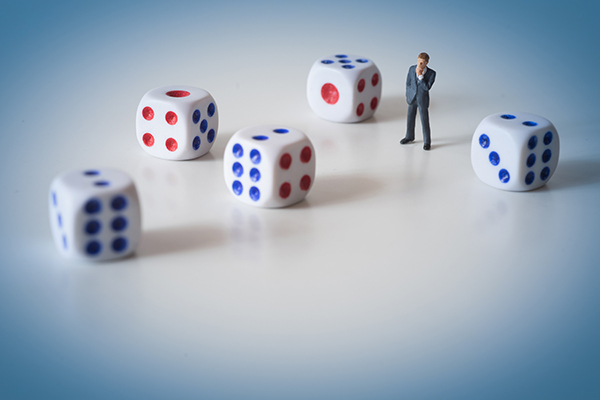
Probability calculations that can be used to inform decisions and manage risk can be very complicated. This unit is designed to help build your foundational understanding of probability and introduce you to some of the techniques that are used to calculate very difficult probabilities. You will continue to work with the Games Fair interactive tool and be exposed to real world situations to start to realize the impact of probability in your world.
The focus of this unit is on Probability Distributions. You will learn how to display all of the outcomes of a probability situation in a table and a bar graph. You will learn some formulas that will work with some situations. A large part of the unit will be calculating the expected value, or average, of a probability situation. The Games Fair Interactive tool will be used throughout the unit and will provide a focus for the summative and lead up to the Culminating Assignment, the Games Fair.
Probability calculations that can be used to inform decisions and manage risk can be very complicated. This unit is designed to help build your foundational understanding of probability and introduce you to some of the techniques that are used to calculate very difficult probabilities. You will continue to work with the Games Fair interactive tool and be exposed to real world situations to start to realize the impact of probability in your world.
After much work to collect valid and reliable information in the form of statistics, you will learn to analyse the statistics to make conclusions that can help make decisions. You will explore one real and two variables statistics using the World Map Interactive tool. A data set used will include a perceived quality of Health Care across Canada. The unit summative will be require you to act as a consultant for a large Canadian franchise to help them make a decision.
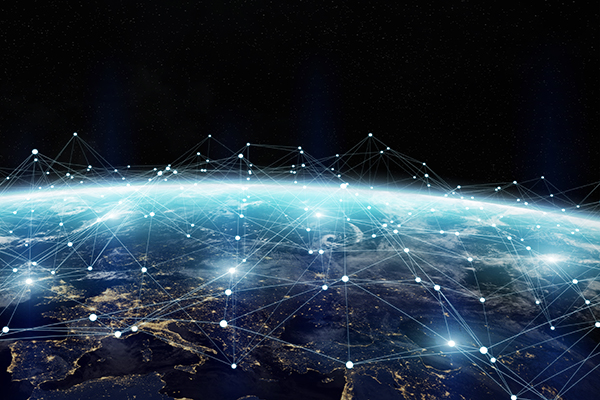
In Unit 3 of this course, you demonstrated how to represent the distribution of a discrete random variable. This unit will look at the distribution of continuous random variables and how they are compared to discrete variables. In the third and fourth activity, you will be introduced to what may be the most important mathematical function: the normal distribution.
In this unit, you will consolidate the concepts and skills you have learned throughout this course. You will complete the course culminating activity, through which you will analyze the impacts of energy transformation technologies on society and the environment.