creamapi csrinru

creamapi csrinru

Index

Home
Introduction
Configuring XPax
Using XPax
Main Screen
Manifest Screen
Diagram Screen
Aircraft Screen
Report Screen
Options Screen
Networked Configuration
Credits

Appendix
SimConnect Troubleshooting


Welcome To XPax - A Passenger Simulation Add-on for FSX and FS9!

Creamapi Csrinru May 2026

Abstract Digital Rights Management (DRM) has become a central, and often contentious, component of the modern video‑game ecosystem. One of the most widely discussed tools that interacts with DRM is , a third‑party utility that enables users to run games that would otherwise be restricted by online activation or other protective measures. Within the same sphere of discourse, the username “csrinru” has emerged repeatedly on forums and social platforms, often linked to discussions about DRM circumvention, game preservation, and the broader cultural implications of software protection. This essay offers a comprehensive analysis of CreamAPI, situates the “csrinru” presence within the community, and explores the legal, ethical, and technical dimensions of DRM and its circumvention. The goal is to illuminate the complex interplay between developers’ attempts to safeguard their intellectual property, the legitimate concerns of consumers and archivists, and the evolving norms of digital culture. 1. Introduction The video‑game industry has witnessed exponential growth over the past two decades, with revenues surpassing those of the film and music sectors combined. Alongside this commercial success has come an intensified focus on protecting software assets from unauthorized copying and distribution. DRM, in its many forms—online authentication, license checks, encrypted binaries—aims to preserve revenue streams and deter piracy. However, DRM often creates friction for legitimate users, prompting the rise of a counter‑culture that seeks to bypass such restrictions.

(short for “Cream API”) is a notable example of a tool designed to interface with certain DRM schemes, most prominently the Denuvo anti‑tamper system and the Steam client. By emulating the responses that a legitimate client would provide, CreamAPI enables a game to launch without a persistent online connection. While its developers claim it is intended for “legitimate owners” who face technical obstacles, the tool has also been adopted by individuals seeking to run cracked or pirated copies of games. creamapi csrinru

A sustainable path forward requires a nuanced balance: developers must design DRM that protects revenue without alienating paying customers; legislators should consider the rights of owners to preserve and use purchased software; and communities must continue to promote responsible discourse, distinguishing between legitimate preservation and illicit distribution. Abstract Digital Rights Management (DRM) has become a
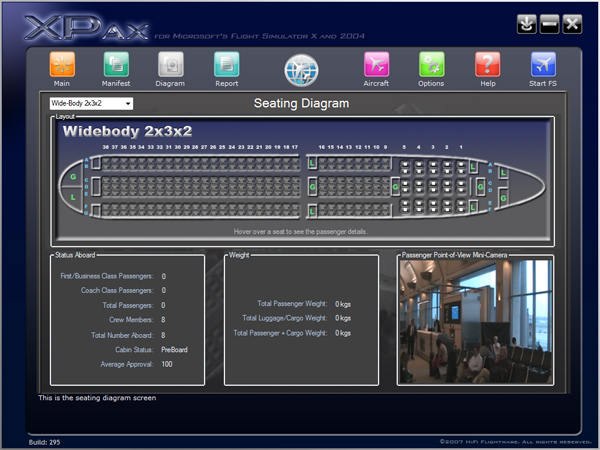
 
Passengers and their individual statistics including health and approval rating are constantly updated based on the performance of the flight. The entire flight process, from pre-boarding to deplaning, is simulated and supplemented by multimedia content including audio and video.
 
creamapi csrinru
Cabin attendants, Gate Attendants and Captain voice sets are included and fully customizable using the easy options screen. New voice sets can be recorded with a few clicks of the mouse. Video, provided in a “Passenger point-of-view” format is also fully customizable within the interface with bit of simple movie production.
 
XPax is designed to run along-side FS and automatically senses when certain phases of the flight take place, launching appropriate events, audio and video.
 
With XPax, everything you do is monitored closely and the passengers will react accordingly.  Using abrupt control movements, climbing or descending too fast, obtaining unusual attitudes, too many g-forces, aggressive taxi turns or a hard landing will all reduce passenger satisfaction and in extreme cases will cause injuries!
 
Many other features, as well as a comprehensive user guide and top-notch HiFi customer support are all included.
 
Features

Abstract Digital Rights Management (DRM) has become a central, and often contentious, component of the modern video‑game ecosystem. One of the most widely discussed tools that interacts with DRM is , a third‑party utility that enables users to run games that would otherwise be restricted by online activation or other protective measures. Within the same sphere of discourse, the username “csrinru” has emerged repeatedly on forums and social platforms, often linked to discussions about DRM circumvention, game preservation, and the broader cultural implications of software protection. This essay offers a comprehensive analysis of CreamAPI, situates the “csrinru” presence within the community, and explores the legal, ethical, and technical dimensions of DRM and its circumvention. The goal is to illuminate the complex interplay between developers’ attempts to safeguard their intellectual property, the legitimate concerns of consumers and archivists, and the evolving norms of digital culture. 1. Introduction The video‑game industry has witnessed exponential growth over the past two decades, with revenues surpassing those of the film and music sectors combined. Alongside this commercial success has come an intensified focus on protecting software assets from unauthorized copying and distribution. DRM, in its many forms—online authentication, license checks, encrypted binaries—aims to preserve revenue streams and deter piracy. However, DRM often creates friction for legitimate users, prompting the rise of a counter‑culture that seeks to bypass such restrictions.

(short for “Cream API”) is a notable example of a tool designed to interface with certain DRM schemes, most prominently the Denuvo anti‑tamper system and the Steam client. By emulating the responses that a legitimate client would provide, CreamAPI enables a game to launch without a persistent online connection. While its developers claim it is intended for “legitimate owners” who face technical obstacles, the tool has also been adopted by individuals seeking to run cracked or pirated copies of games.

A sustainable path forward requires a nuanced balance: developers must design DRM that protects revenue without alienating paying customers; legislators should consider the rights of owners to preserve and use purchased software; and communities must continue to promote responsible discourse, distinguishing between legitimate preservation and illicit distribution.

Requirements:

  • Microsoft Flight Simulator X or Flight Simulator 2004

  • FSX Requires Service Pack 1 (which includes SP1 SimConnect), and FS9 requires FSUIPC v3.75 or later (available free from http://www.schiratti.com/dowson.html)

  • Windows XP or later (earlier operating systems not officially supported)

  • 1GB+ RAM

  • 500MB+ Free Hard Drive Space

  • .NET 2.0 (included with installation package)

  • Windows Media Player v11 or later

  • Internet Explorer v7 or later